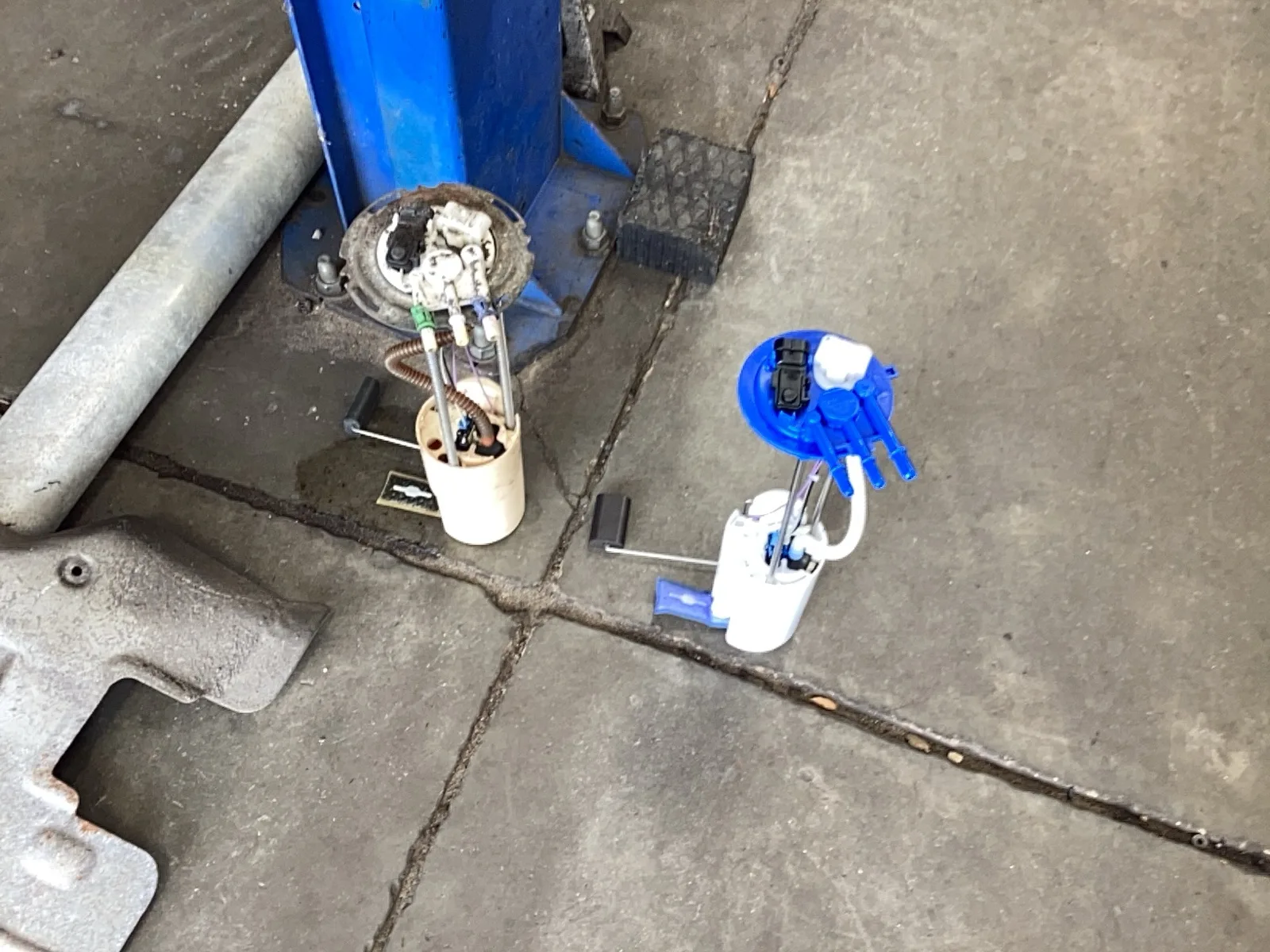
The fuel system has one job: deliver a steady, measured amount of clean fuel at the right pressure, every time you turn the key. A pump in the tank pushes it, a filter or strainer keeps debris out, lines carry it forward, and injectors spray it in a fine pattern the engine can actually burn. When any one of those drifts out of spec, the engine doesn't quit, it starts running badly, and that's what most people notice first.
Fuel problems get guessed at more than almost anything else on a car, so we test instead. We put a gauge on the system and watch real pressure at idle, under load, and after shutdown. A pump that looks fine at idle can fall on its face when the engine asks for more, and a system that bleeds down overnight explains a long morning crank better than any hunch does. We check volume as well as pressure, and we read fuel trims to see what the computer has been quietly compensating for.
Florida hands fuel systems two problems that drier states don't. Ethanol blended gas pulls moisture out of humid air, and a vehicle that sits for weeks at a stretch, a work truck, a second car, a camper, can end up with water and varnish in the tank instead of clean fuel. That shows up as hard starts, rough running and clogged injectors long before anyone suspects the fuel itself.
On injectors we'll give you the straight answer. Cleaning genuinely helps an injector that's dirty and still spraying. It does nothing for one that's failing electrically, leaking down, or physically damaged, and selling you a cleaning on that injector just delays the repair you actually need. We test them, tell you which category yours fall in, and go from there, with the test results in front of you.